
Bruges does not have a separate cuisine sealed inside the city walls. What it serves best is Flemish and Belgian food, enriched by North Sea produce, brewing culture and a serious tradition of chocolate and pastry. The useful question is not “What dish belongs only to Bruges?” but “Which regional dishes make sense here, and where can I enjoy them well?”
Different diets need more specific planning, so we also maintain dedicated guides to vegan and vegetarian Bruges and eating gluten-free in Bruges.
The dishes to know
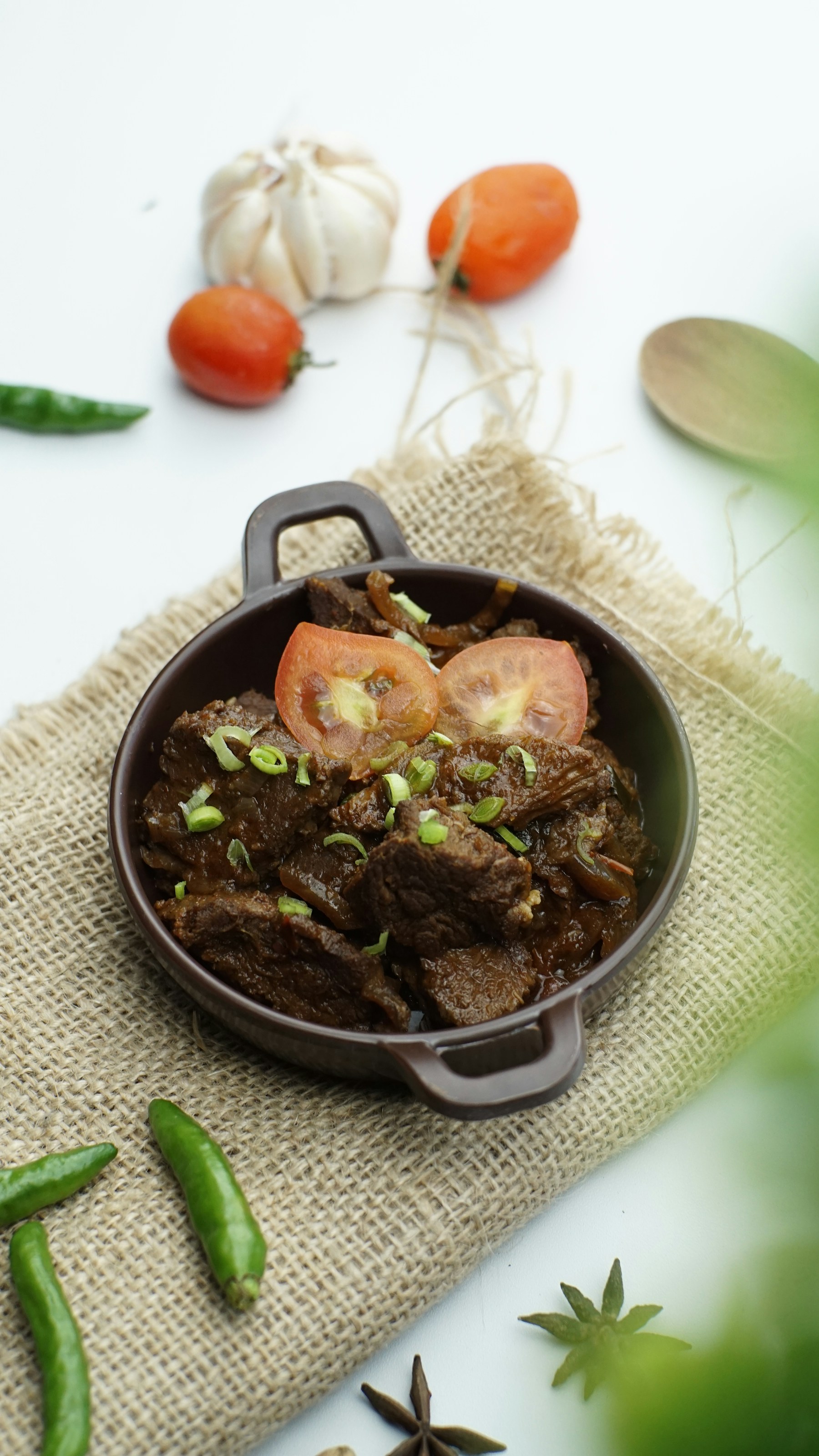
Flemish beef stew
Known as stoofvlees or carbonnade flamande, this is beef cooked slowly with beer until the sauce becomes dark, sweet-savoury and deeply comforting. Recipes vary by kitchen and beer. It is commonly served with fries, which should stay crisp enough to survive the sauce.
Belgian endives au gratin
Chicons au gratin —or witloof met ham in de oven in Dutch— is classic Belgian home cooking: endives wrapped in ham, covered with béchamel and cheese, then browned in the oven. It is not a Bruges-only speciality, but it is exactly the kind of regional dish worth spotting in brasseries and on seasonal menus.
North Sea shrimp croquettes
Grey shrimp from the Belgian coast have a delicate, concentrated flavour. A good croquette has a crisp shell and a creamy filling in which the shrimp still taste distinct. Their coastal identity makes them one of the most recognisably Belgian starters to try in Bruges.
Waterzooi, mussels and eel
Waterzooi is a creamy stew associated especially with Ghent, traditionally made with fish and now often chicken. Mussels with fries are Belgian rather than specifically Bruges. Eel in green herb sauce, paling in ’t groen, belongs to the wider Flemish river landscape. All are valid regional choices when a restaurant treats them as food, not props.
Fries, waffles and chocolate
Belgian fries are usually fried twice and served with a generous choice of sauces. Brussels waffles are rectangular and airy; Liège waffles are denser, sweeter and studded with pearl sugar. Neither was invented as a “Bruges waffle”. Chocolate, however, has a strong living craft scene in the city.
Cambrinus: the convivial first choice
Cambrinus is our most companionable starting point. It is a beer brasserie close to Burg with an unusually broad Belgian beer list and a menu grounded in hearty Flemish cooking. The attraction is not trying to conquer hundreds of labels. Ask for a beer style that suits your dish, or choose one local beer and give it attention.
It works particularly well for a mixed table: one person can explore beer while another orders a familiar stew. Reserve when possible, especially for an evening meal, and allow for the fact that individual dishes can move on and off the menu.
More places with character
Café Vlissinghe
Café Vlissinghe offers something no themed restaurant can manufacture: continuity. Its documented roots reach back to 1515, and its Sint-Anna location makes it a natural reward after the windmills or Jerusalem Chapel. Go for the historic pub atmosphere, courtyard and unhurried rhythm.
De Garre
The narrow passage to De Garre is easy to miss even though it lies between Markt and Burg. The small brown café is known for its own tripel. Treat the strength with respect; one carefully enjoyed glass is a better memory than turning the stop into a challenge.
't Nieuw Walnutje
On leafy Walplein, 't Nieuw Walnutje is a convenient, relaxed option after the Begijnhof or De Halve Maan brewery. Its value is the combination of an easy Flemish meal and a pleasant square rather than culinary theatre.
De Mangerie
De Mangerie is useful when you want Belgian grounding without a strictly traditional menu. The kitchen allows wider influences while keeping local ingredients and classics in view.
Carpe Diem
Near the Begijnhof, Carpe Diem is a bakery and tearoom in a historic building. It is better suited to breakfast, bread, pastries and a daytime pause than to ticking off a famous dish.
Chocolate stops worth choosing deliberately
The Chocolate Line is the adventurous option, known for unusual flavours and a contemporary approach. The Old Chocolate House offers a more traditional shop and upstairs tearoom, especially appealing on a cold or rainy afternoon.
Buy fewer pieces and ask what was made locally. A good praline should tell you something about texture, freshness and balance, not only novelty.
How to order well
- Choose one rich main dish, not stew, fries, waffle and chocolate in a single sitting.
- Ask whether a beer is sweet, bitter, sour or roasted before ordering by name.
- Reserve dinner when a particular place matters, but keep one nearby alternative in mind.
- Check dietary needs directly. Traditional stews, sauces and croquettes can contain ingredients that are not obvious.
- Do not chase a restaurant because a travel list called it “the best”. Match the place to the moment: brasserie, brown café, bakery, chocolate shop or contemporary restaurant.
The most typical meal in Bruges is not a rigid menu. It is a Flemish dish served without hurry, a beer chosen for flavour, and enough appetite left to walk beside the canals afterwards.