
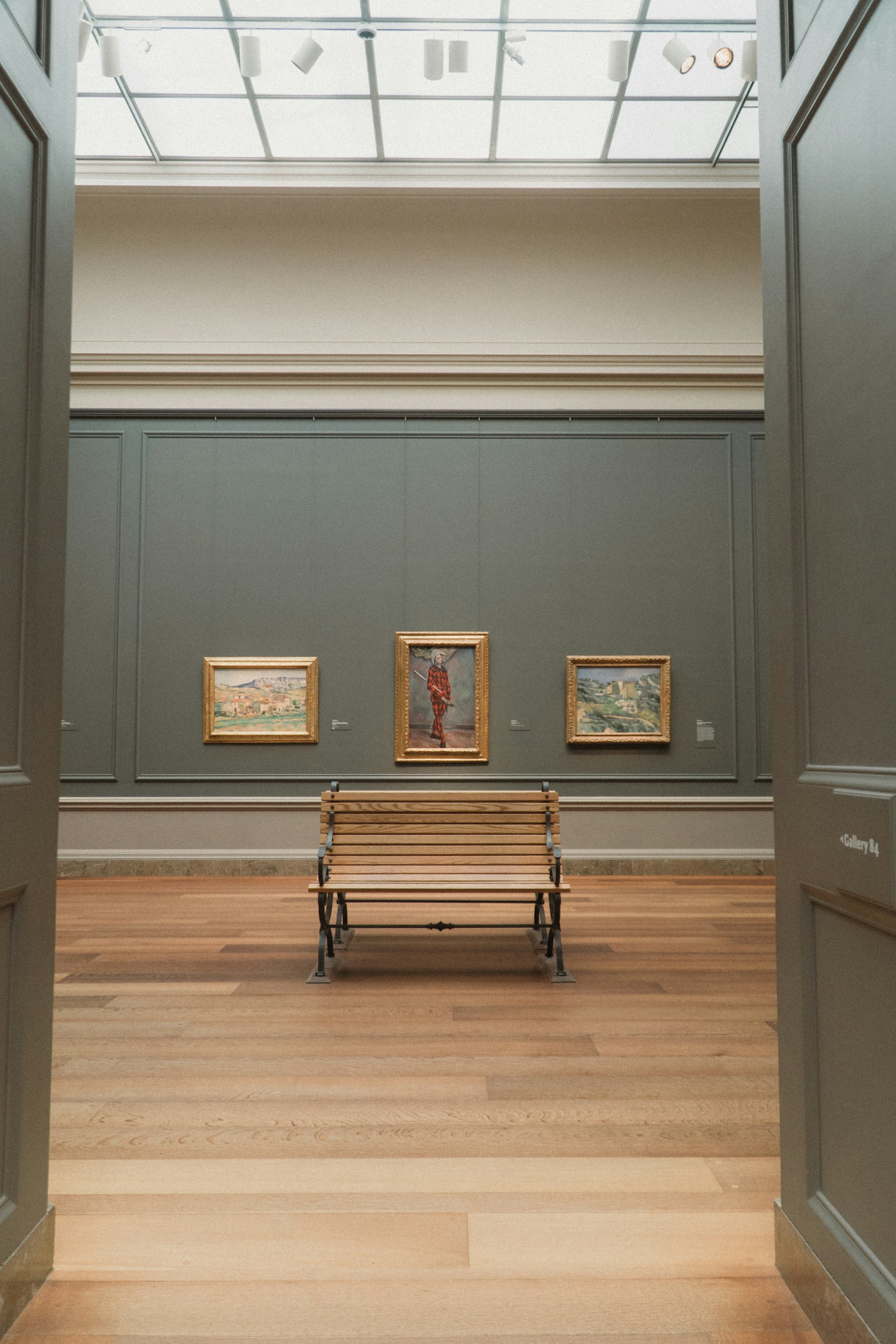
Bruges is often treated as an outdoor museum, which can obscure the real ones. Its collections explain why the streets look as they do: merchant wealth, hospital care, Burgundian ceremony, civic government and painting of astonishing precision.
Do not try to visit everything in one day. Choose one major art museum and one building-led experience, then leave time to look at the city with better eyes.
If weather or family pace will shape the choice, continue with our plans for Bruges in the rain and Bruges with children.

Groeningemuseum: the essential art collection
Choose the Groeningemuseum (advertising link)◆ if this is your first cultural visit or if Jan van Eyck is one of the reasons you came. The museum’s strength is focus. It connects the Flemish Primitives with later art from the region without requiring an enormous day.
Van Eyck’s work rewards proximity and patience: surfaces that appear smooth from across a room become jewels, fur, skin, glass and reflected light. Do not rush from masterpiece to masterpiece. The quieter works around them show how artistic ideas travelled and changed.
Best for: first visits, Flemish painting and roughly a focused half day when combined with the surrounding museum quarter.
Museum Sint-Janshospitaal: Memling in context
At the Museum Sint-Janshospitaal (advertising link)◆, the building is part of the collection. The medieval hospital cared for travellers, the poor and the sick, and its surviving spaces give Hans Memling’s paintings a human context no white-cube gallery could reproduce.
Choose it if you want art, architecture and social history together. The St Ursula Shrine is especially rewarding when you slow down enough to follow its small painted scenes.
Best for: Memling, medieval care, atmospheric interiors and rainy afternoons.
Gruuthusemuseum: how wealthy Bruges lived
The Gruuthusemuseum (advertising link)◆ occupies the city palace associated with the lords of Gruuthuse. Furniture, tapestries, sculpture and everyday objects make urban history tangible, while the building’s relation to the Church of Our Lady reveals the privileges of elite life.
Choose it when you care as much about rooms and social structure as famous paintings. It pairs naturally with the church and Boniface Bridge, but resist trying to see all three at peak midday speed.
Best for: interiors, decorative arts, Burgundian society and architectural details.
Church of Our Lady Museum: Michelangelo and dynastic memory
The Church of Our Lady Museum (advertising link)◆ contains Michelangelo’s Madonna and Child, an exceptional work to find north of the Alps. The church also holds the monumental tombs of Charles the Bold and Mary of Burgundy.
This is an active religious building as well as a museum site. Visit with the attention appropriate to both. The Michelangelo may be the headline, but the relationship between art, burial and Burgundian power makes the stop richer.
Best for: sculpture, Mary of Burgundy and travellers with limited museum time.
BRUSK: the contemporary exhibition hall
BRUSK (advertising link)◆ is the modern counterpoint in the museum quarter. Its large, light-filled halls are designed for temporary exhibitions that cannot be reduced to the scale of Bruges’ historic buildings.
Whether it belongs on your itinerary depends entirely on the current programme. Check the official exhibition page before you go. Even when you are not seeing a show, Bar Brusk gives the cultural quarter a useful meeting place.
Best for: major temporary exhibitions, contemporary display and repeat visitors.
The Belfry: a museum you climb
The Belfry is civic architecture, viewpoint and working carillon story in one. The ascent passes treasury spaces and clock mechanisms before reaching the panorama.
It is not accessible like a conventional gallery. The stair is long, increasingly narrow and physically demanding. If that suits you, the climb explains the tower as a machine and symbol rather than merely a skyline feature.
Best for: views, civic history and visitors comfortable with steep stairs.
Adornes Domain: private history at human scale
The Adornes Domain and Jerusalem Chapel sits outside the municipal museum circuit, which is part of its appeal. The chapel, family story and compact museum reveal how a merchant dynasty expressed faith, memory and international identity.
It is smaller than the headline museums and benefits from reading rather than rushing. Combine it with Sint-Anna and the windmills.
Best for: unusual architecture, intimate history and travellers avoiding crowds.
Choco-Story and Frietmuseum: family-friendly food history
Choco-Story (advertising link)◆ and the Frietmuseum (advertising link)◆ are lighter, commercial attractions rather than substitutes for the art museums. They can still be useful with children, mixed-interest groups or persistent rain.
Choose one according to genuine curiosity. A focused playful museum is better than dragging an uninterested companion through another altarpiece.
A simple museum plan
- Only two hours: Groeningemuseum or Sint-Janshospitaal.
- Art-focused day: Groeningemuseum, lunch, then Sint-Janshospitaal.
- History-focused day: Gruuthusemuseum, Church of Our Lady and Adornes Domain.
- With children: Belfry if stairs are suitable, then one food museum.
- Heavy rain: Sint-Janshospitaal plus the current BRUSK exhibition.
- Repeat visit: BRUSK and the quieter Adornes Domain.
The Musea Brugge network (advertising link)◆ manages multiple locations and ticket combinations. Opening days, gallery access and temporary displays can change, so check each venue before fixing the order. The best museum day in Bruges is not the fullest one; it is the one that changes what you notice outside.