
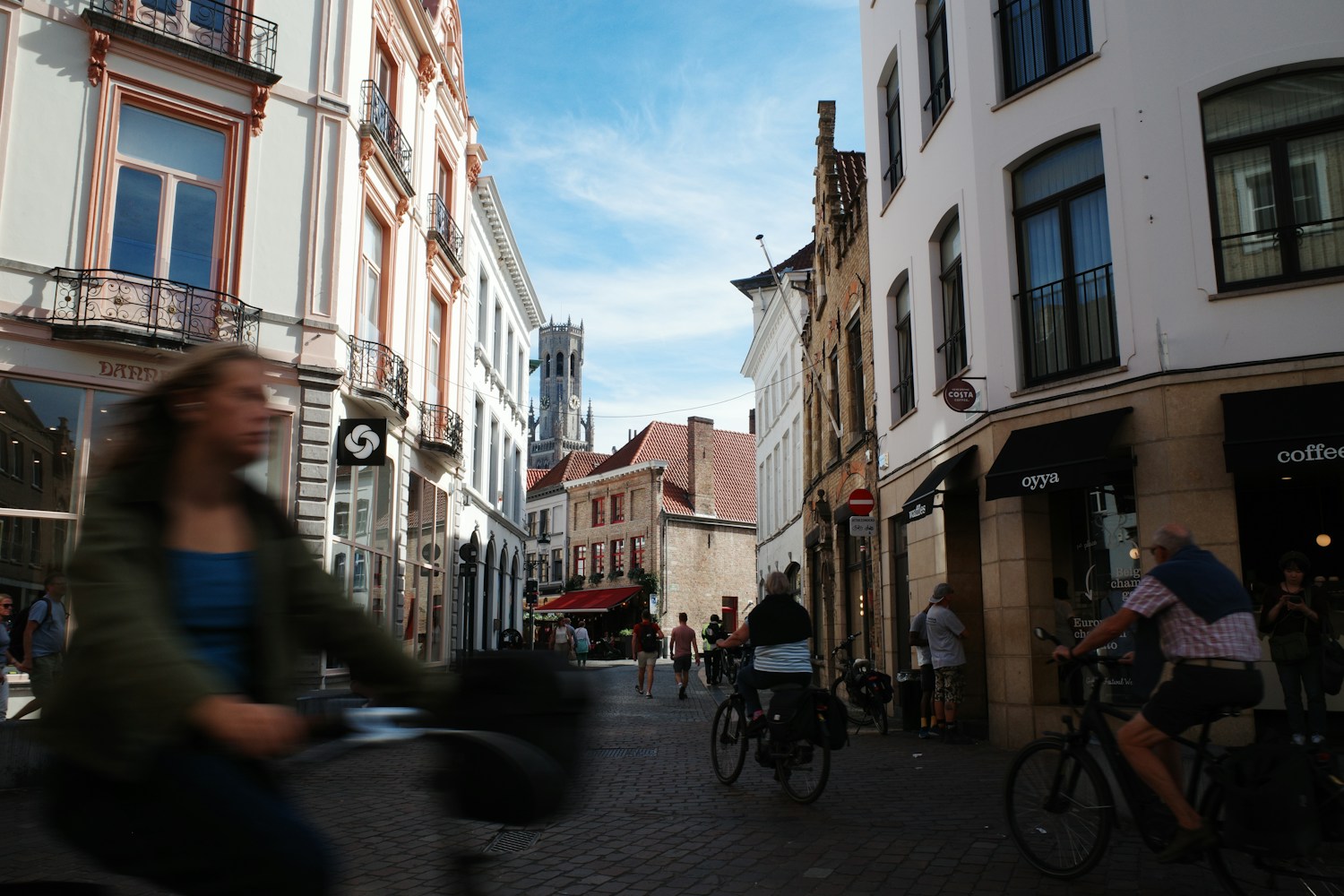
Bruges is unusually easy to enjoy with children because the centre is compact and the scenery changes every few minutes: a canal, a bridge, a tower, a chocolate shop, a courtyard, a park. The trick is not finding enough to do. It is choosing a pace that keeps the city enjoyable for everyone.
For most families, the best formula is one ticketed attraction, one outdoor stretch and one generous pause at a time. A canal boat can replace another long walk; a playground can rescue the afternoon after a museum; and a family room close to the centre can be worth more than squeezing everyone into a prettier but impractical hotel.
If the weather turns, keep our rainy-day Bruges guide handy. For low-cost gaps between paid attractions, there are also plenty of free things to do in Bruges.
Quick answer: is Bruges good for families?
Yes, especially for a one- or two-day city break. The historic centre is walkable, the canal boats give tired legs a break, several museums have specific children's trails, and there are real playgrounds within or just outside the centre.
A few things need planning:
- cobbles can be uncomfortable with tiny pushchair wheels;
- the Belfry means 366 steps and is not a pushchair activity;
- popular attractions can develop queues;
- family rooms in historic hotels vary enormously in layout;
- Zeebrugge's beach is a separate outing rather than a quick detour from Markt.
Where to stay with children
For families, room layout and location matter more than hotel category. A property can be lovely for couples and still be awkward with two children, a cot and a pushchair.
Best area for a first family visit: between the station, 't Zand and Markt
This corridor keeps arrival simple and puts most central sights within walking distance. Staying near 't Zand is particularly practical: it is close enough to walk from Brugge station while avoiding the busiest part of Markt when you arrive with bags.
Family-room examples worth comparing
Le Bois de Bruges, on Vrijdagmarkt beside 't Zand, publishes dedicated family rooms of roughly 40–50 m². That is useful when you want real shared space rather than simply adding a cot to a double room.
Hotel Jan Brito has a duplex family room for up to four, with a double bed downstairs and two singles upstairs. The character is appealing, but the hotel explicitly warns that the upper sleeping area is reached by a steep staircase and may not suit babies, very young children or anyone with reduced mobility.
For families who value a kitchen, parking and more domestic space, Vakantiewoning Barlandus is outside the immediate centre and lists a travel cot and high chair on request. The trade-off is obvious: more room and self-catering convenience, less ability to pop back to the room between central sights.
Do not assume that “family room” means the same thing everywhere. Before booking, check the actual bed configuration, whether a cot is possible in that room type, lift access, stairs, breakfast timing and where the pushchair can be stored.
What works best by age
Babies and toddlers
Keep the day simple. Canal views, short park stops, ducks, bridges and a playground usually work better than stacking attractions. Koningin Astridpark, close to Burg, has a large playground and plenty of benches; it is one of the easiest central reset buttons.
For a bigger indoor break, De Toverplaneet has a separate baby-and-toddler area for children up to four, plus larger climbing and play structures for older children. It is outside the historic core, so treat it as a deliberate excursion rather than a spontaneous stop.
Primary-school children
This is probably the easiest age for Bruges. Musea Brugge has children's activity material across several museums: the Groeningemuseum has *The Green Feather* activity booklet, Gruuthusemuseum offers family discovery, Volkskundemuseum has play stations and play suitcases, and Sint-Janshospitaal has a children's audio tour and children's hospital activities.
Children under 13 enter Musea Brugge locations free, with one important exception: the Belfry is free only for children under seven. If several adults or older teenagers are visiting museums, compare the options in our best museums in Bruges guide rather than buying tickets automatically.
Teenagers
Give them a real choice. The Belfry, Historium, a canal boat, contemporary architecture at the Concertgebouw, cycling or simply time to explore shops and food stops can work better than a museum schedule chosen entirely by adults.
The Concertgebouw Circuit is particularly useful for families that want something more interactive than a traditional collection: children can follow a playful stamp trail, and the visit combines architecture, sound, art and a rooftop view.
The canal boat: high value for tired legs
A canal boat ride is one of the strongest family choices in Bruges because it gives you roughly half an hour seated while still seeing a substantial part of the historic centre. Our Bruges canal boats guide explains the five official boarding points, current ticketing and practical limits.
Queues can build in good weather, and boarding is not step-free. If one child is already exhausted, a long queue defeats the purpose: walk to another jetty or move the boat to a quieter part of the day.
Markt, Belfry and Historium
Markt and Burg already provide plenty to look at without buying anything: heraldry, horse-drawn carriages, towers, façades and the changing soundscape of the squares.
The Belfry is memorable for children old enough to enjoy the climb, but the 366 steps are narrow and demanding. It works best as a chosen challenge, not as a compulsory family landmark.
Historium (advertising link)◆ uses sets, film and sound to turn medieval Bruges into a narrative experience. Children who switch off in front of display cases may respond much better to that format.
Chocolate, fries and museums that feel like a story
Choco-Story (advertising link)◆ combines cocoa history, demonstration and tasting; Frietmuseum (advertising link)◆ builds a museum around the potato and Belgian fries. Both can be good family choices, but doing both on the same day can turn Bruges into a succession of themed interiors.
A better rhythm is one of them, then outdoors. The Volkskundemuseum is another strong option for younger visitors because Musea Brugge explicitly describes it as its most child-friendly museum, with play stations and activity material.
For a gentler pause, The Old Chocolate House has an upstairs tea room. A chocolate stop works perfectly well as twenty quiet minutes; it does not need to become another attraction.
Playgrounds, parks and room to move
Koningin Astridpark
This is the most useful central playground: close to Burg and the Fish Market, with a large play area, pond, trees and plenty of seating. It is ideal after a central museum because you do not need to redesign the day to reach it.
Graaf Visartpark
A little west of the centre, Graaf Visartpark has a traffic garden and an adventure-style playground built around timber structures for preschool and school-age children. It is a better destination when the playground itself is part of the plan.
Children's farm De Zeven Torentjes
This free working children's farm in Assebroek has animals, meadows and a recreation area. Its listed facilities are unusually family-friendly: pushchairs are allowed, and there is a changing table, high chair, microwave, toilet and picnic possibility. It is outside the central sightseeing loop, but for younger children it can be more memorable than another historic interior.
Zeebrugge: turn the trip into a city-and-beach break
Zeebrugge is part of Bruges but feels like a separate outing. The Family Beach at Zeedijk 15 has a children's beach village with swings, climbing frames and a life-size play boat, and it is close to Zeebrugge-Strand station.
From April to September, the nearby Sports Beach adds football, volleyball, outdoor fitness and other play space. In July and August, sports and games equipment can be borrowed free of charge subject to availability.
For a two-night family stay in good weather, one day in medieval Bruges and a second half-day at the coast can work better than trying to fill every hour with city attractions.
Eating with children without turning every meal into logistics
You do not need a dedicated children's restaurant, but it helps to know which places are already presented as child-friendly. Current Visit Bruges listings mark That's Toast, Bar Lowie and Troostbaar as child-friendly choices. They suit a casual breakfast, lunch or coffee break better than a long formal meal.
Treat “child-friendly” as a useful filter, not a promise of every facility. If a high chair, children's portion or allergy procedure is essential, ask the restaurant directly before reserving.
For very young children, the children's farm De Zeven Torentjes is unusually practical because its published facilities include a high chair, microwave and changing table.
Pushchairs, changing facilities and toilets
A sturdy pushchair is easier on Bruges' cobbles than tiny travel wheels. Most Musea Brugge locations are accessible with a pushchair and have resting points, but individual historic buildings can still involve stairs or restricted routes.
Public toilets are distributed across the station, Bargeplein, Begijnenvest, 't Zand, the City Halls, Gruuthuse, Historium/Provinciaal Hof, Burg and other central locations. They are generally paid facilities; some have baby-changing tables.
Do not wait until a child urgently needs one. A sensible family route naturally passes several of these points, and the station, 't Zand, Markt/Burg and museum quarter are useful anchors.
If accessibility matters beyond ordinary pushchair use, our accessible Bruges guide goes into route surfaces, transport, toilets and venue access in much more detail.
Cycling with children
Bruges is bike-friendly by Belgian-city standards, but the historic centre still has pedestrians, cars, buses, delivery traffic and cobbles. A guided Quasimundo bike tour is better suited to confident family cyclists than to a child still learning road awareness.
For independent riding, Bike Rental Koffieboontje lists children's bikes in several sizes, free child seats, trailers/tag-along options and helmets for rent. That makes cycling realistic even when not everyone rides a full-size bike.
If it rains
A rainy family day does not need to become five museums in a row. Pick one strong indoor experience and one flexible backup.
Good options include Historium, Choco-Story, Frietmuseum, the Concertgebouw Circuit, Musea Brugge's children's programmes, Cinema Lumière and De Toverplaneet. The last two are especially useful when the goal is simply to give children a genuine break from sightseeing.
A well-paced one-day family itinerary
Morning: arrive through Minnewater, cross towards the museum quarter, then continue to Burg and Markt. Do not schedule the Belfry and a museum back-to-back unless the children actively want both.
Late morning: take the canal boat if the queue is reasonable.
Lunch: choose somewhere casual and keep the meal unhurried.
Early afternoon: choose one main indoor attraction — Historium, Choco-Story, Frietmuseum, Gruuthusemuseum or Volkskundemuseum according to age and interest.
Late afternoon: finish at Koningin Astridpark or walk towards the windmills if everyone still has energy.
A two-day family itinerary
Day 1: classic Bruges without overload
Use the one-day plan above and stop before the children are exhausted. The goal is to leave something for tomorrow, not to complete Bruges.
Day 2: choose your family's version of Bruges
For younger children, combine Volkskundemuseum + windmills + a playground. For active families, rent bikes and explore the ramparts. In warm weather, make Zeebrugge the second day's centrepiece. In persistent rain, use the Concertgebouw Circuit or De Toverplaneet and keep the rest flexible.
If you are building the trip around several museums, see our best museums guide before buying individual admissions.
The family rule that matters most
Bruges rewards curiosity much more than completion. Children notice details adults walk past — swans, bells, carved animals, strange roofs, boats disappearing under low bridges. Leave enough empty space in the day for those things to count.
Two experiences remembered happily are better than six admissions negotiated under pressure.