


With three days, Bruges stops feeling like a day trip. You can see the centre early, look at art without watching the clock, walk through residential districts and keep an afternoon for whatever has interested you most.
An excursion is not compulsory. Damme, the coast or Ghent are choices rather than tasks. If Bruges still holds your attention, staying is an excellent decision.
Start with the structure of our two-day itinerary, then use the extra time for the charming places beyond the busiest views.
Day one: learn the shape of Bruges
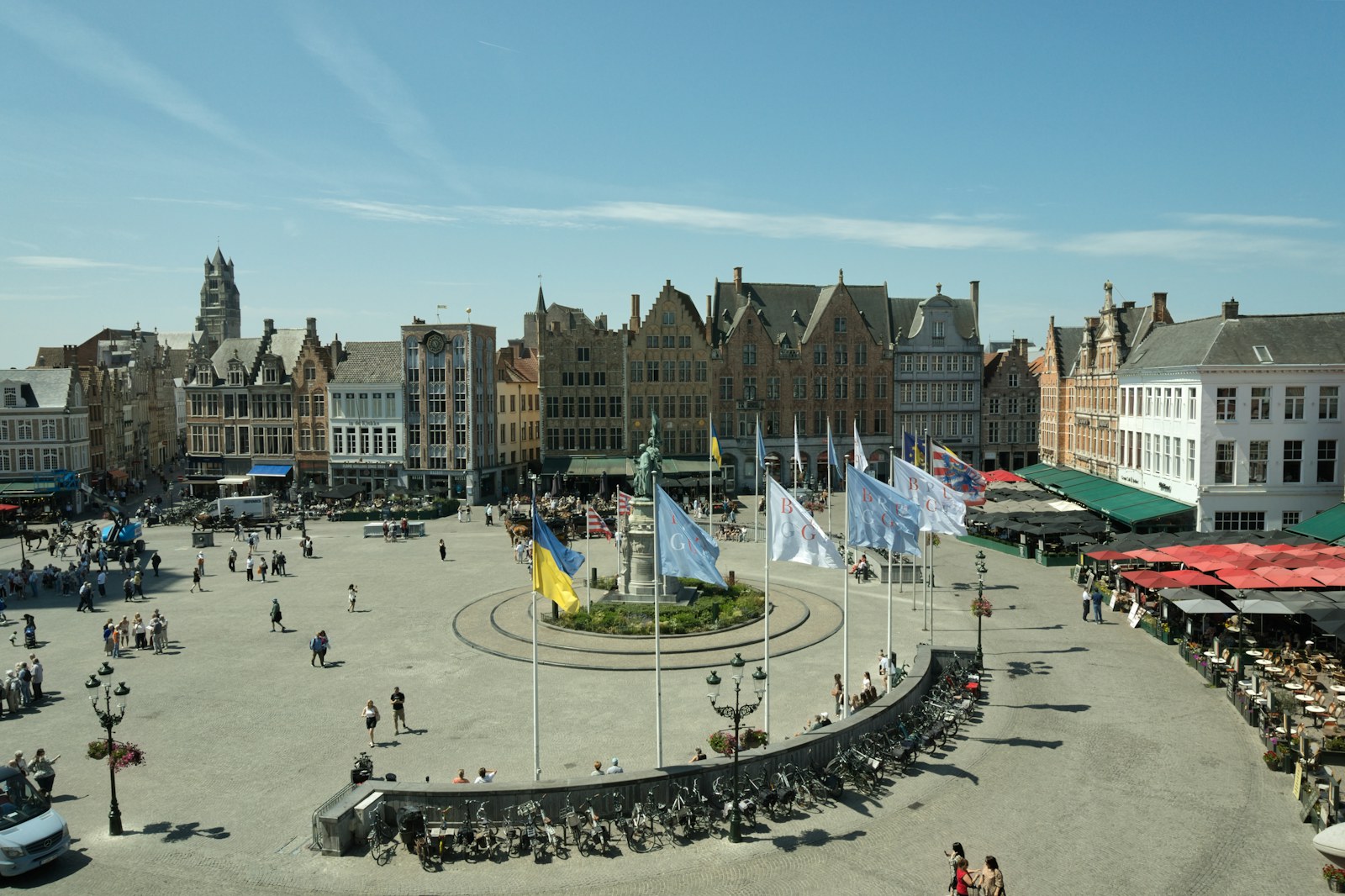
Begin at Minnewater and the Begijnhof if you arrive through the station. Continue past the Church of Our Lady, Dijver and Rozenhoedkaai to Burg and Markt. The route explains the transition from the green southern edge to the civic centre.
Choose between climbing the Belfry and saving that energy for a museum. After lunch, take a canal boat if conditions suit, then visit Groeningemuseum (advertising link)◆ or Museum Sint-Janshospitaal (advertising link)◆ — not both at speed.
Walk by the canals after dinner. Bruges after the day visitors leave is one of the best reasons to stay overnight.
Day two: art, houses and the quiet east
Use the morning for the museum you omitted or for Gruuthusemuseum (advertising link)◆. Gruuthuse is particularly rewarding if rooms, urban life and Burgundian power interest you. Check the exhibition at BRUSK (advertising link)◆ too: its value to your itinerary depends on the current programme.
Have lunch on the side of town you plan to explore afterwards. Follow Groenerei and Sint-Annarei to the Adornes Domain, continue through Sint-Anna, pause at Café Vlissinghe and reach the rampart windmills.
The second day need not end back on Markt. Eating in another district helps you understand how the different parts of Bruges fit together.
Day three option A: go deeper in Bruges
Choose this if you enjoy museums, prefer a slow pace or have changeable weather.
- Visit the Church of Our Lady and consider the connection between Michelangelo, Mary of Burgundy and dynastic memory.
- Pick one theme: De Halve Maan, Choco-Story (advertising link)◆ or the Bruges Beer Experience (advertising link)◆.
- Walk around Minnewater, Magdalena or the ramparts without stringing landmarks together.
- Make one meal matter. Our food guide explains local dishes and useful places without turning lunch into a checklist.
Day three option B: Damme, the coast or another city
Damme suits cycling and flat polder landscapes. The coast adds the North Sea and a completely different horizon. Ghent provides another major historic city with its own personality. Check official transport for your date and choose only one.
Do not sacrifice your last Bruges afternoon merely to collect another place name. If you have an early flight next morning, a long excursion can turn a calm break into a chain of fragile connections.
A rhythm that works
Build each day around one important visit in the morning and one flexible decision in the afternoon. Alternate interiors with walks. Reserve restaurants only when losing that particular table would change the trip.
Useful adjustments
- With children: choose the boat, windmills and one interactive museum; reduce consecutive churches and galleries.
- In rain: concentrate culture around the museum quarter and use cafés or breweries as proper pauses.
- With reduced mobility: follow the official accessible route, confirm lifts and never assume a historic building has step-free entry.
- On a tighter budget: combine one chosen museum with free ramparts, parks, squares, churches and canal walks.
Three days are not for completing Bruges. They are for losing the feeling that you have to see everything.